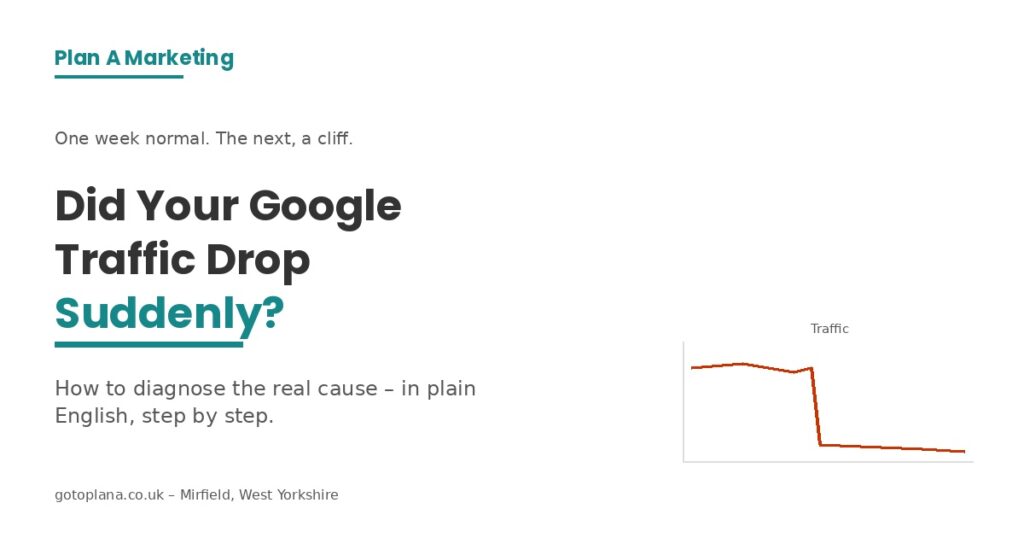
A sudden drop in website traffic is one of the most alarming things you can see in Analytics. One week the numbers look normal, the next they’ve fallen off a cliff. Before you panic, it helps to know that most sudden drops trace back to one of a small handful of causes, and most are fixable once you know which one you’re dealing with.
Here’s how to work through it methodically, in the order we’d check it ourselves.
First, Rule Out a Tracking Problem
Before assuming you’ve lost real visitors, check whether you’ve lost the ability to measure them. A sudden drop in website traffic that lines up exactly with a site update is often a broken Analytics tag rather than genuinely fewer people visiting. If your developer changed themes, plugins, or code around the same time, check that your tracking code is still firing on every page before looking any further.
A Google Algorithm Update
Google runs regular updates to how it ranks pages, and some are big enough to move traffic significantly overnight. If your drop coincided with a known update — Google announces major ones on its Search Status Dashboard — your rankings may have shifted because Google reassessed your content rather than because anything is technically broken.
Something Changed Technically on Your Site
A redesign, a migration to a new host, or a routine plugin update can accidentally add a “noindex” tag, block Google in your robots.txt file, or break your sitemap. These tell Google to stop showing your pages, and the drop can be sudden and severe. Check Search Console’s Coverage report for a spike in excluded pages around the time it started.
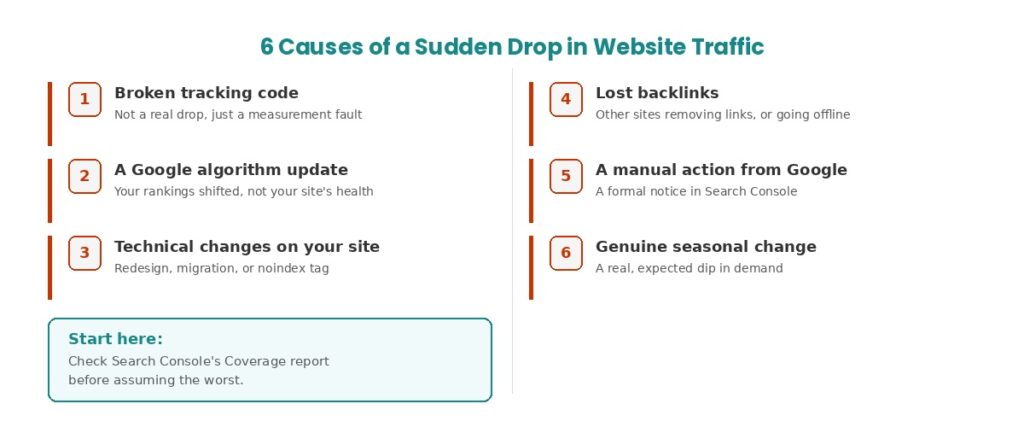
You’ve Lost Backlinks
If other websites that used to link to you have removed those links, gone offline, or been penalised themselves, some of the trust Google gave your site through those links disappears too. This tends to cause a gradual decline rather than an overnight cliff, but a large directory or partner site disappearing can cause a sharper drop.
A Manual Action From Google
If Google’s team has manually reviewed your site and found something against their guidelines — thin content, unnatural links, or a security issue — you’ll usually see a formal notice in Search Console under “Manual Actions.” This is rarer than the other causes but far more serious, since it typically means part of your site has been removed from search results.
Genuine Seasonal or Market Change
Not every drop points to a site problem. Some industries have predictable quiet periods, and a real shift in demand can look identical to a technical issue in your analytics. Compare the same period against previous years, not just last month, to see whether this is a pattern rather than a one-off.
How to Actually Diagnose Yours
Work through Search Console’s Performance and Coverage reports first — they’ll usually tell you whether Google can still see and rank your pages. Cross-reference the drop date against site changes, known Google updates, and your own seasonal history. If you’re still unsure what’s behind a sudden drop in website traffic, a proper technical audit is the fastest way to rule things in or out.
Our SEO and website audit checks all of this in one pass, and we can also help with getting your website found locally again once the cause is fixed.
Frequently Asked Questions
Check whether your Google Analytics tracking code is still installed and firing correctly, especially if the drop lines up with a recent site update. Google Search Console's own traffic data is a useful second source, since it measures search visibility independently of your Analytics setup.
Yes – redesigns and migrations commonly introduce accidental noindex tags, broken redirects, or robots.txt blocks that tell Google to stop showing your pages. This is one of the most common and most fixable causes of a sudden, sharp drop.
It varies considerably, from a few weeks to several months, depending on the update and how much needs improving. Recovery generally requires genuinely improving the content or experience the update was targeting, rather than waiting it out.
A gradual decline is worth investigating too, but it usually points to different causes – lost backlinks or increasing competition, rather than a technical fault. It's less urgent than a sudden cliff, but ignoring it for too long lets the problem compound.
Stop guessing why your site isn’t working.
If your website isn’t bringing in calls, leads, or sales, we can tell you exactly why. For a fixed fee of £699, Plan A Marketing will perform a complete, plain-English diagnosis of your site and hand you a prioritised action list of fixes.
From there, you decide how to execute it: do it yourself, let us teach your team, or have us do it for you.