Why Beautiful Web Design Doesn’t Guarantee Google Rankings
A pretty website no traffic problem is one of the most frustrating positions a business owner can be in. You’ve paid for a slick design, the branding looks sharp, and visitors who do land on it seem to like it — but Google barely sends anyone your way. The uncomfortable truth is that good design and good rankings are two separate jobs, and doing one well doesn’t automatically deliver the other.
Google Doesn’t “See” Your Website the Way You Do
When you open your site, you see colours, layout, and imagery. Google’s crawlers read code — headings, text content, links, and technical signals. A beautifully designed page that’s light on actual written content, or built in a way that hides text behind images and animations, can look stunning to a human and be almost invisible to Google. Design and Google’s understanding of a page are two different layers, and only one of them is being marketed to you as “SEO-friendly” by most web designers.
What Actually Decides Rankings
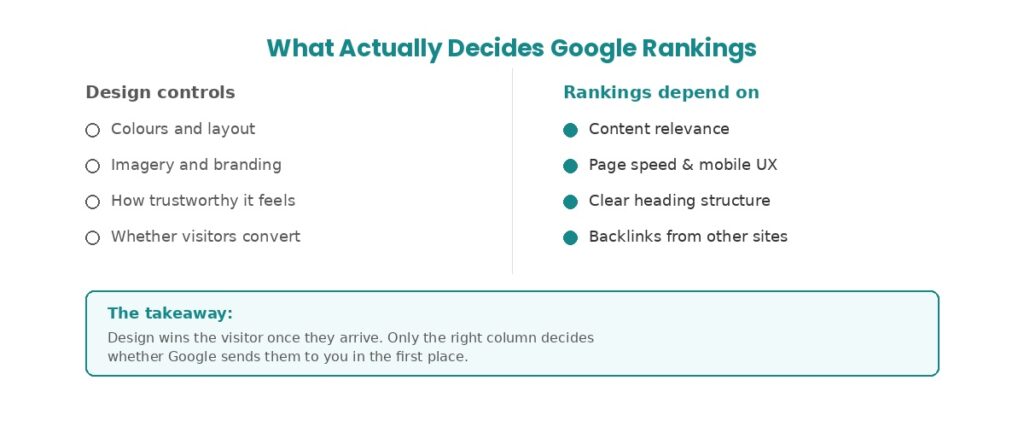
Google ranks pages based on a mix of factors that mostly have nothing to do with how attractive a site looks: whether the content genuinely answers what someone searched for, technical basics like page speed and mobile usability, a clear heading structure, and other reputable sites linking to yours. A plain-looking competitor page that nails these fundamentals will consistently outrank a polished one that doesn’t.
Beautiful Can Still Be Invisible
This is exactly how a pretty website no traffic story usually plays out: some of the most common rankings problems hide behind genuinely good-looking sites. Missing alt text on images, no proper heading hierarchy, thin or duplicated content, and modern design frameworks that load content in ways search engines struggle to read properly. None of this is visible to a visitor admiring the layout — it only shows up when you check what Google can actually see.
Design’s Real Job Is Conversion, Not Ranking
Good design absolutely matters — just not for the reason most people assume. Once someone lands on your site through a search, design is what convinces them to trust you, stay, and get in touch. Rankings get people to the door; design decides whether they walk through it. Treating the two as the same problem is exactly how a pretty website no traffic situation develops alongside poor enquiry rates once traffic does arrive.
A Redesign Can Make Things Worse, Not Better
If a new, better-looking site launches without the old page structure, redirects, and content carried across properly, rankings that took years to build can disappear within weeks. This is one of the most common causes of a sudden traffic drop we see, and it’s entirely avoidable with the right technical handover.
How to Get Both
Design and SEO aren’t in competition — they just need to be planned together rather than treated as separate projects. Brief your designer on the technical basics up front: proper headings, fast-loading images, genuine written content, and a clean handover if you’re migrating. If you’re not sure whether your current site has these fundamentals in place, that’s exactly what a proper technical review is for.
Our SEO and website audit checks the technical side that design alone can’t fix, and if you’re planning a redesign, it’s worth reading how building a new website the right way protects the rankings you already have. If you’ve been comparing options, we’ve also covered free audit tools versus a paid expert audit and what each one actually tells you.
Frequently Asked Questions
Indirectly, yes – good design can improve how long visitors stay and how they behave on the page, which Google does factor in slightly. But it's a minor signal compared to content relevance, technical SEO, and backlinks, so design alone won't compensate for weak fundamentals.
They're most likely doing better on the things that actually count – more relevant content, a properly structured page, faster load times, or more websites linking to them. Visual polish isn't part of Google's ranking algorithm in any direct sense.
Yes, if it's not handled carefully. Changing page structure, URLs, or content without proper redirects and technical planning is one of the most common causes of a sudden traffic drop after a redesign goes live.
Brief your designer on the technical SEO basics from the start – proper headings, genuine written content, fast-loading images, and a clean migration plan if you're moving platforms. Treating design and SEO as one combined project avoids most of the common pitfalls.
Stop guessing why your site isn’t working.
If your website isn’t bringing in calls, leads, or sales, we can tell you exactly why. For a fixed fee of £699, Plan A Marketing will perform a complete, plain-English diagnosis of your site and hand you a prioritised action list of fixes.
From there, you decide how to execute it: do it yourself, let us teach your team, or have us do it for you.